
Paul Crompton
Documentary Director / Executive Producer and former student of Fred Longworth High School.
Paul Crompton
Documentary Director / Executive Producer and former student of Fred Longworth High School.
Paul Crompton
Documentary Director / Executive Producer and former student of Fred Longworth High School.
Home > Alumni > Alumni Stories > Other Alumni > Paul Crompton
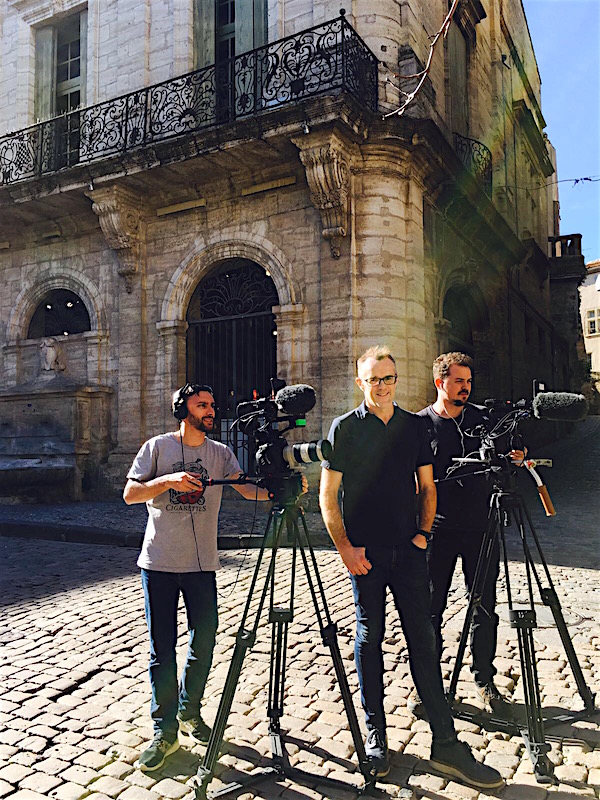
Paul Crompton is an award-winning British documentary director, executive producer, and writer with over 25 years of experience in factual broadcasting and cinema-release independent documentaries. He currently serves as an Executive Producer and Director at Spark Media Partners and has held commissioning roles at major UK networks, including ITV Factual, Channel 5, and Sky One.
In this article Paul talks about his memories of his time at Fred Longworth High School.
My name is Paul Crompton and I left Freddie’s in 1983. I am currently a Documentary Director/Executive Producer.
My favourite subjects at school were Geography as the teacher was brilliant – Mr Bold was passionate about the subject and he was also very funny. I liked German as we had state of the art headsets and watched lots of videos. I also liked PE because it meant not having to do any writing –Mr Rimmer was ageless, he was also the PE teacher for my dad. And strangely, I also liked Maths as I found it quite easy and I enjoy doing puzzles, so I treated maths as a bit of a game.
Since leaving Fred Longworth I have worked as a welder, a draughtsman, had loads of part time jobs from making kitchen worktops to being a summer camp counsellor in Pennsylvania. I also went to UMIST as an “independent student” which is someone who has been financially independent from their parents for more than 6 years. I scraped a 2:2 in Building Engineering but it was mixing with the other students that opened my eyes to more opportunities for work.
My biggest achievement is usually the most recent project. You put your heart and soul into producing and directing, and it can be a mental challenge. Being finally satisfied with a documentary series that often takes a year or more to make is a big reward. Being recognised with awards for your work is also nice, but positive comments from family, friends and peers always feels far more valuable.
I think Fred Longworth was a creative place, it encouraged a spirit of adventure, there was an artistic streak through the school, but it also kept me well grounded – the playground/classroom humour was brilliant.
I’m almost always in work mode. When editing observational documentaries, you are always trying to ‘find the story’. You have hundreds of hours of material to work with and you know that somewhere in there amongst all the chaos is a great story that deserves to be well told. You just have to find it. It can be 10pm on a Saturday night when a solution pops into your head. I might spend all working day in a café doing meetings with people who have new ideas or broadcasters who are looking for new ideas. The working hours, and conditions, are impossible to define.
I’m currently in the edit with about 7 edit suites up and running, each with two people and at the same time there are a handful of people in different parts of France filming Brits who are doing up chateaus. It’s all for a big new series for Channel 4 which launches in 2018. So, keeping an eye on all that is what I’d currently call a typical day. Plus, in complete contrast to that, I am also making a 30 second TV commercial for West Ham United. It’s just me and my editor, who has an edit suite in a shed in his back garden, he calls himself the ‘Sheditor’.
What I love most about my job is that I don’t have a permanent desk anywhere, I don’t have a fixed location. I am either in edit suites, TV channels in meetings, offices of production companies or any one of Costa, Pret or Starbucks. I feel like I’ve done the office thing, being a draughtsman for two years, and it made me feel uncomfortable. I also spent 3 years in a welding bay. That was more fun, messing about with metal.
My job has lots of different challenges. Getting a new commission on an idea you’ve taken to a TV channel is a massive hurdle, it’s tough as you feel like one of those American vacuum cleaner salesmen. Writing scripts is good, but definitely a challenge, I wished I’d paid more attention to Mrs Blackhurst in English Language at school. And then another big challenge is persuading people who you want to film with and getting them to sign a contract that gives me complete editorial control of THEIR lives is an enormous task. Funnily enough the most difficult people to persuade usually always make the best subjects to watch on TV. And vice versa!
For young people getting into the industry, my advice is that experience and qualifications come second to personality and enthusiasm. This is not a ‘9-5 industry’ so ordinary things like regular income, paid holidays, social hours, secure long-term employment are not on the table. But it does give you enormous creative challenges, opportunities to travel to unusual places anywhere in the world and you get to work with anyone from pop stars to politicians, Hollywood actors to dangerous criminals. Life can often feel a little bit surreal, but you get to see and experience things that you couldn’t dream up. I love that part of my job.
If I were to employ someone, I’d be happy to have someone who has done media studies, but I’d be more interested in anyone with specialist knowledge whether you’re an expert in politics, forensic science or a plumber, I prefer people with a positive attitude, who are natural problem solvers and have plenty of enthusiasm.